• ♥ 24.196 Viner kun for deg!
  • Et personlig råd!
  • Sikker innpakning!
  • Pålitelig frakt!

Barbera (233)

Alle fasetter av Barbera vinstokken lærer du om med VINELLO.

Les mer zu Barbera
Für die Filterung wurden keine Ergebnisse gefunden!
Ikke tilgjengelig
Spar 5 %, kjøp 12!
9999
2023
Ikke tilgjengelig
Spar 5 %, kjøp 12!
Rødvin Rødvin
tørr tørr
Italia Italia
Piemonte (IT) Piemonte
170,38 NOK*
0.75 l (227,17 NOK * / 1 l)

Leveringstid ca. 3-5 virkedager

Ikke tilgjengelig
Haller
Spar 5 %, kjøp 12!
9999
2024
Ikke tilgjengelig
Haller
Spar 5 %, kjøp 12!
Rødvin Rødvin
tørr tørr
Italia Italia
Piemonte (IT) Piemonte
117,38 NOK * 113,78 NOK*
0.75 l (151,71 NOK * / 1 l)

Leveringstid ca. 2-4 virkedager

Ikke tilgjengelig
Haller
Siste sjanse, spar 15 %!
9999
2021
2022
Ikke tilgjengelig
Haller
Siste sjanse, spar 15 %!
Rødvin Rødvin
tørr tørr
USA USA
Kalifornië (US) Kalifornië
150,98 NOK * 145,48 NOK*
0.75 l (193,97 NOK * / 1 l)

Leveringstid ca. 3-5 virkedager

15 % rabatt - siste flasker!
Nå spar her!
🌿 10 % vårsalg 🌿 Våraktige priser
Bla gjennom nå!
Must-Have Viner
Disse vinene bør du nyte!
Prøvepakker
nå mangfold prøve & spare!

Barbera: The Piemontese Diva Among Grape Varieties

A Grape Variety with Character and Tradition

Barbera, one of the oldest and most fascinating grape varieties in Italy, is known for its rich history and unique character. Originally hailing from the Piedmont region, it has developed over the centuries into one of the most popular and widely cultivated varieties in the country.

The Barbera belongs to the fresh-fruity grape varieties with a medium body. Characteristic is its low tannin content and its deep red, vibrant color. This Italian grape variety is primarily grown in the Piedmont, where the focus is on reduced yields and high quality. Well-known among Italian red wines is the Barbera d'Asti from the eponymous municipality. In regions like Piedmont, pure Barbera red wine is produced. Other wine-growing areas use the grape variety as a component in modern cuvées.

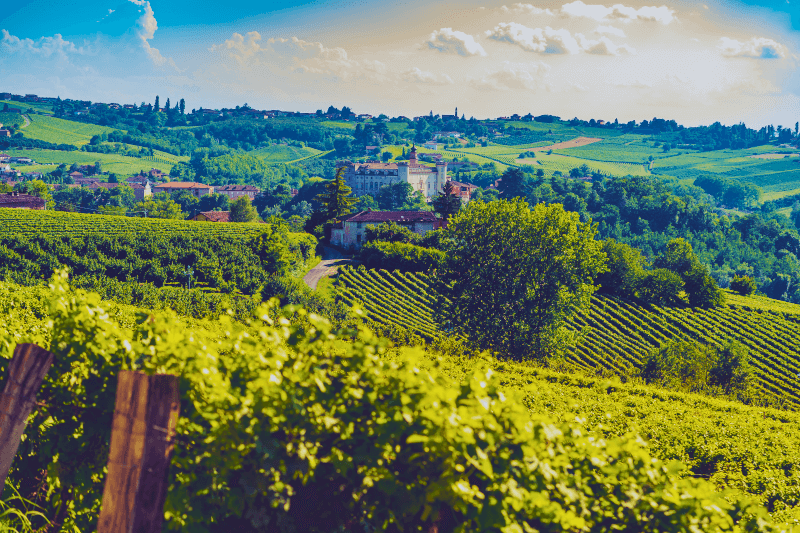
Costigliole-Barbera-Wine Region

Origin, Lineage, and History

Barbera – a name that sounds like music in the ears in Piedmont. The indigenous grape variety has its home in the gentle hills of this Italian region. And it has been deeply rooted in the Piemontese wine culture for centuries. Its exact origin remains unclear, but early written mentions from the 13th century testify to its long history.

Its name is likely derived from "barba," the Italian word for beard, which refers to the hairy skins of the grapes. Barbera has always been an important grape variety for wine production in Northern Italy. It has earned its place as one of the noblest and most characterful varieties.

Barbera – A Grape Variety with Many Facets

Barbera is a true diva among grape varieties. The grape presents itself as both charming and accessible, as well as complex and profound. Its adaptability to different terroirs and vinification methods allows for the production of a diverse palette of wines. From fruity-light everyday wines to powerful and elegant Barolo alternatives, there is something for everyone.

Distribution and Cultivation Areas

The grape variety thrives particularly well in temperate climates with warm days and cool nights. The best Barbera wines often come from hillside locations that offer optimal sunlight and drainage. Piedmont is considered the heart of the Barbera cultivation areas. Here, it clearly dominates the vineyard area and shapes the character of the region like no other grape variety. In the provinces of Asti, Alba, and Alessandria, you will find the best sites for Barbera. Here, it can thrive on chalky soils and in cool, hilly areas. Today, Barbera is found not only in Piedmont. Barbera is also found in other regions of Italy, such as Lombardy and Emilia-Romagna. But Barbera has also made its mark in other parts of Italy and overseas, such as California, Australia, and South America.

Climate and Soil – The Ideal Conditions for Barbera

Barbera loves it cool and chalky. The gentle hills of Piedmont, with their chalky soils and cool climate, provide the perfect conditions for developing its complex aromas and powerful structure. The grape variety benefits from sufficient rainfall and thrives best at altitudes between 200 and 400 meters.

Barbera Wines - A High-Yielding Vine

Barbera is a high-yielding vine. This almost turned into its downfall during the wine boom in Italy in the 1970s. The Barbera vine was used to produce cheap bulk wines. These were also – as uncovered in the methanol scandal of the mid-80s – partially adulterated. Declining quality and low prices severely damaged the reputation of Barbera wines to the point where they were nearly unsellable.

Barbera Grape

Barbera Wine - High Quality and Pure

In the meantime, Italy has returned to appropriate amounts and careful handling of Barbera vines. Today, for example, valuable wines again come from Piedmont – the wine region where Barbera is the most widely cultivated grape variety. Such as the famous Barbera d'Alba and Barbera D'Asti. High-quality, pure Barbera wines are also produced in Emilia-Romagna and Lombardy. In other wine regions in Italy, Barbera is primarily used for table wines and as a blending partner.

Barbera D'Alba - Where Barbera Grows Pure

Piedmont is blessed with a hilly and picturesque landscape. With the cool soil of the Langhe between the Po and the Alps and world-famous wines. One of them is undoubtedly the Barbera d’Alba, a ruby-red, intensely aromatic, and full-bodied red wine. Almost exclusively vinified from the noble Barbera grape variety, Barbera d’Alba embodies the finest aromas of Piedmont. In addition, it has a structure that not only allows for aging but strongly recommends it. Treat yourself to a glass of Barbera d’Alba right after purchase and one after years of aging. You will realize that a crucial component of the highest quality is time.

Barbera d’Alba - Small Town, Great Reputation

The red wine Barbera d’Alba extracts the full temperament and zest for life of Piedmont's character with every grape. Intense color games between ruby-red and garnet-red. A deep flavor with hints of blackberry, cherry, strawberry, and jam. Spicy notes of cinnamon, pepper, and vanilla. A Barbera d’Alba will stay in your memory, even when the bottle has already shared its last drop. A Barbera d’Alba must have at least 12% vol. to earn its DOC status. In the case of the Barbera d’Alba Riserva, even 12.5% vol. is required. However, most wines far exceed this requirement. Barbera d’Alba is indeed a lush wine that makes celebrations festive and friends joyful.

DOC Barbera d’Alba

The controlled designation of origin, in Italian Denominazione di origine controllata, expects the winemakers of Piedmont to fulfill the following regulations.

  • The wine must consist of at least 85% from the Barbera grape variety, and the remaining 15% can be supplemented with Nebbiolo.
  • A legal aging period is only required for Barbera d’Alba Superiore, namely 12 months, of which 4 months must be spent in wooden barrels.

Barbera d'Asti - A Journey to the Province

In the hilly heart of Piedmont, amid the triangle of Milan, Turin, and Genoa, the town of Asti nestles against the wine-laden hills. Especially the Barbera grape variety lines the vineyards. The demand for the intense and fruity character of the red grape variety is high. Without it, a Barbera d’Asti would be unthinkable. The popular red wine Barbera d’Asti DOCG is usually vinified as a pure type, at least 90% Barbera. This allows for a robust, ruby-red wine that expresses the temperament and passion of Piedmont in every glass.

Pure Barbera d’Asti Wine

The Italian red wine from the provinces of Alessandria to Asti knows how to convey its strengths appealingly. A deep ruby red presents itself in the glass, fruity hints of ripe red berries and cherries caress the palate. A juicy acidity opens up a fresh taste. Barbera d’Asti may be complex, yet it is also accessible and upfront. The wine from the southeast hilly landscape of Piedmont has enjoyed DOCG status since 2008. Accordingly, the legally established regulations for Barbera d’Asti are unassailable. And they assist the Italian winemakers in producing wines of the highest quality with a big and popular name.

The Diversity of Barbera Wines

Barbera is a chameleon-like grape variety. Depending on the region, vintage, and vinification method, wines with different characters emerge. From fruity-light rosé wines to sparkling wines to full-bodied red wines. The range of Barbera wines is virtually endless.

Taste and Character – A Distinctive Profile

Barbera wines impress with their intense color, which can range from deep ruby red to garnet red. The wines are typically fruity with a pronounced acidity. They offer aromas of red fruits, herbs, and spices. On the nose, they unfold a seductive bouquet of red fruits like cherry, raspberry, and plum. Paired with spicy notes of pepper, cloves, and nutmeg. On the palate, they show strength and elegance with well-integrated acidity and a long, harmonious finish.

Info Box Barbera d’Asti DOCG

  • Consists of at least 90% from the Barbera grape variety, but is predominantly vinified as a pure type.
  • The wine must age for at least 4 months, for Barbera d’Asti Superiore it is at least 14 months, of which 6 months must be in wooden barrels.
  • The alcohol content must be at least 12% vol., for Superiore at least 12.5% vol.

Vinification and Aging

Barbera wines can be vinified differently depending on the style and desired character. Young wines are aged in stainless steel tanks, while Barolo alternatives are aged in barriques made of French oak. This gives them additional complexity and maturity.

When vinifying Barbera wines, winemakers often rely on a combination of traditional and modern techniques. This allows them to fully exploit the potential of the grapes. The aging time in wooden barrels, both Slavonian oak and French oak, adds additional complexity and depth to the wines.

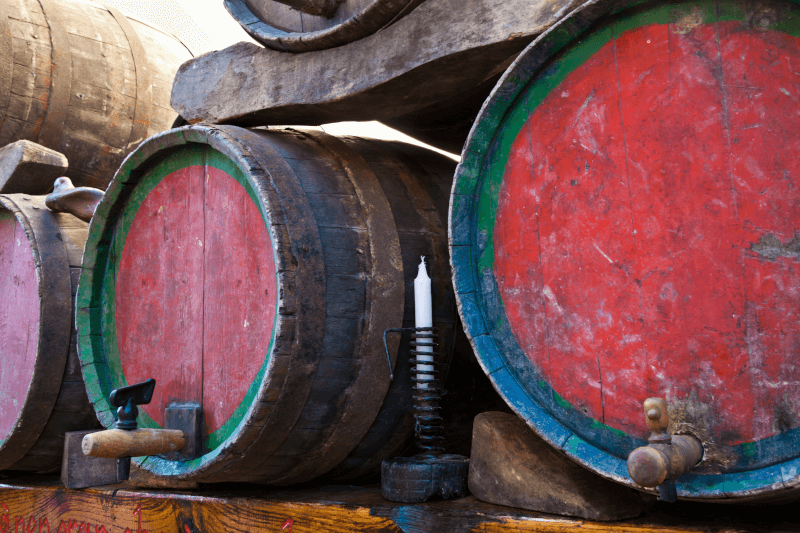
Barbera Wine Barrels

Special Facts

  • Barbera is the second most widely cultivated grape variety in Italy after Sangiovese.
  • The grape variety is also known under the names Barbera d'Asti, Barbera del Monferrato, and Barbera d'Alba.
  • Famous Barolo blend Barbera d'Alba Superiore DOCG is also made from Barbera grapes.
  • Barbera wines are typically drinkable young. Some Barolo alternatives can be aged for up to 10 years or longer.
  • The Barbera vine is very resistant to diseases, making it attractive to winemakers.
  • In addition to Italy, Barbera is also grown in other countries such as Argentina and California.
  • Some of the best Barbera wines are produced in the DOCG areas of Piedmont, such as Barbera d'Asti and Barbera del Monferrato.

Recommendation for Enjoyment

Barbera wines are excellent companions to a variety of dishes. Thanks to their lively acidity, they harmonize particularly well with hearty dishes. But even enjoyed solo, they provide pure pleasure.

The fruity and light-footed variants pair wonderfully with antipasti, salads, and pasta. More robust Barbera wines pair perfectly with grilled meat, game, hearty stews, or aged cheese.

Buy Barbera Online Cheap

The treasure of Piedmont for cozy evenings, for good friends, for delightful dishes - Barbera. Red wines, rosé wine, and wine packages. Order your Italian red wine from the town of Asti online. And experience the vividly colored wines that bring intense fruit to the glass. At VINELLO, you will find a selected range of high-quality Barbera wines that you can easily buy online. Simply select your favorites, add them to the shopping cart, and click buy. We will then securely and sustainably process your order. From Piedmont through VINELLO to you - coziness in buying wine, enjoyment in drinking wine.

Ting å vite om Barbera
Hva er forskjellen mellom Barbera og andre røde druesorter som Sangiovese eller Nebbiolo?
Barbera kjennetegnes av sin karakteristiske syre og fruktige aromaer. Sangiovese kjennetegnes gjerne av en elegant struktur og Nebbiolo av intense tanniner.
Hvor lenge kan Barbera-viner lagres?
Barbera-viner er ofte drikkeklare i ung alder. De kan imidlertid også lagres i flere år for å utvikle ytterligere kompleksitet.
Hva er den ideelle temperaturen for servering av Barbera-viner?
Barbera-viner utvikler sin fulle smak best ved en serveringstemperatur på mellom 16 °C og 18 °C.
Finnes det forskjellige stilarter av Barbera-viner?
Ja, det finnes ulike stilarter av Barbera-viner. Fra friske og fruktige varianter til komplekse og tanninrike viner.
Er alle Barbera-viner tørre i smaken?
Barbera-viner er som regel tørre, men det finnes også produsenter som lager halvtørre eller søte versjoner.
Hvor kan du kjøpe Barbera-viner?
Du finner Barbera-viner i velassorterte spesialforretninger eller på nettet, f.eks. hos VINELLO.
NACH OBEN